In the evolving landscape of software development, DevSecOps has emerged as a critical discipline - one that integrates security into every phase of the software delivery lifecycle. As organizations strive to ship faster without compromising safety, the tools we choose become more than just enablers - they shape our workflows, our culture, and ultimately, our outcomes.
Among the many platforms available, GitHub stands out. Once known primarily as a code hosting service, GitHub has matured into a robust ecosystem that supports the full spectrum of DevSecOps practices. For architects and engineers tasked with embedding security into development pipelines, GitHub offers a compelling blend of automation, visibility, and developer-first design.
This post explores why GitHub is increasingly becoming the platform of choice for DevSecOps professionals, and how it can help teams move from theory to practice.
The DevSecOps Imperative
DevSecOps isn’t just a buzzword. It’s a response to real-world challenges. Traditional security models often treated security as a gatekeeper, bolted onto the end of the development process. This led to delays, friction between teams, and vulnerabilities slipping through the cracks.
DevSecOps flips that model. It embeds security into every stage of development, from code commit to deployment. It encourages collaboration between developers, security engineers, and operations teams. And it relies heavily on automation to ensure that security checks are consistent, scalable, and fast.
But implementing DevSecOps is easier said than done. Tool sprawl, lack of integration, and resistance to change are common hurdles. That’s where platform choice becomes critical and why GitHub deserves a closer look.
GitHub’s Strengths for DevSecOps
GitHub’s appeal lies in its ability to meet developers where they already are. It’s the default platform for millions of developers, which means DevSecOps initiatives don’t have to fight for adoption. Instead, they can build on existing habits and workflows.
Here are some of the key reasons GitHub excels as a DevSecOps platform:
Developer Familiarity
GitHub is already deeply embedded in the daily routines of most development teams. Pull requests, issues, and discussions are part of the rhythm. This familiarity reduces the learning curve and makes it easier to introduce security practices without disrupting productivity.
Built-in Automation with GitHub Actions
GitHub Actions allows teams to automate everything from builds and tests to security scans and compliance checks. Workflows can be triggered on pull requests, commits, or scheduled intervals, making it easy to enforce security policies continuously.
Whether you’re running SAST tools, checking for secrets, or validating infrastructure-as-code, GitHub Actions provides a flexible and native way to integrate these steps into your pipeline.
Native Security Tooling
GitHub has invested heavily in security features that align with DevSecOps principles:
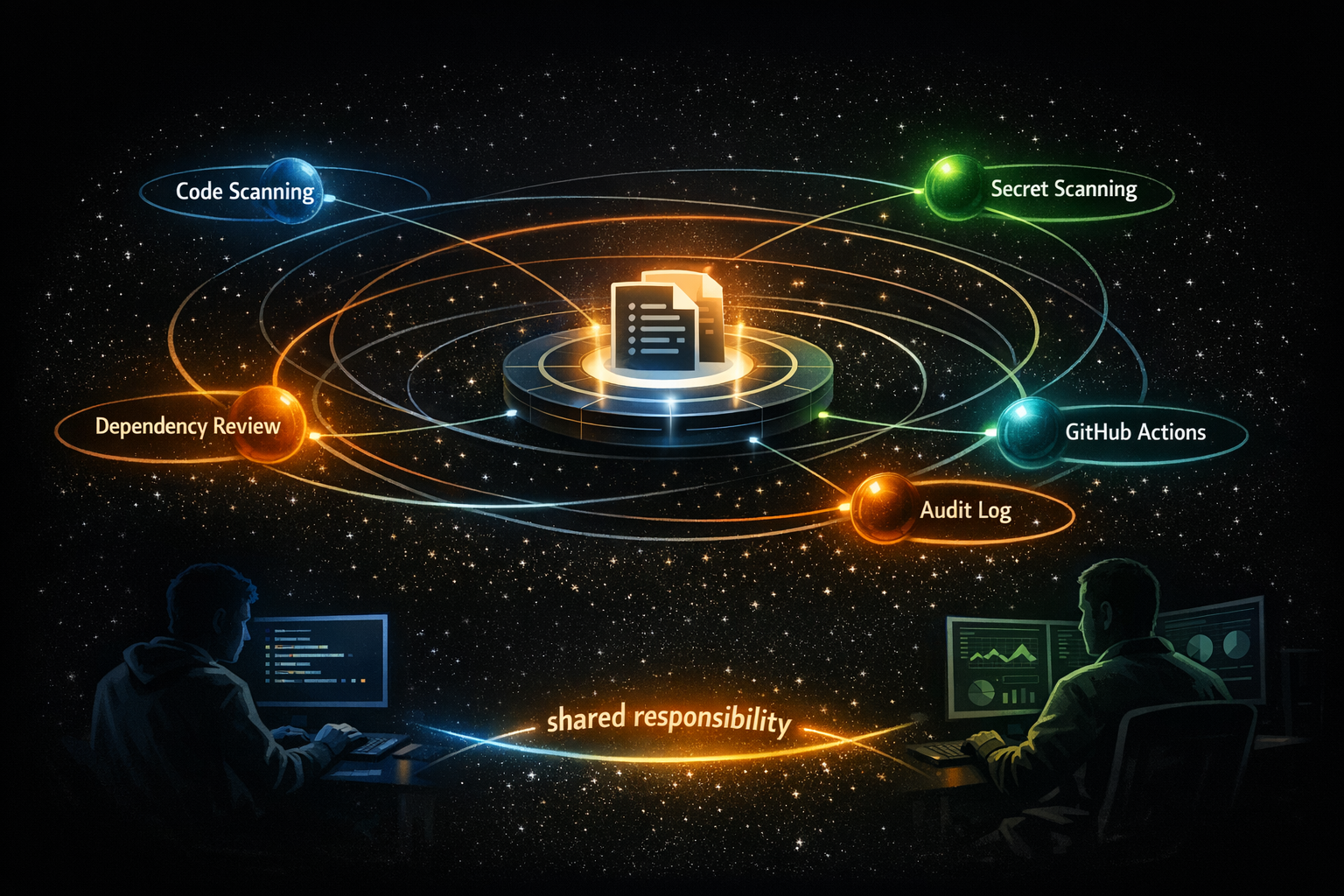
- CodeQL: A powerful static analysis engine that lets you write custom queries to detect vulnerabilities in code.
- Secret Scanning: Automatically detects credentials and tokens committed to repositories.
- Dependency Review: Highlights changes to dependencies in pull requests and flags known vulnerabilities.
- Security Overview: Provides a centralized dashboard for tracking vulnerabilities across repositories.
These tools are tightly integrated into the GitHub experience, reducing the need for external platforms and making security more accessible to developers.
Auditability and Traceability
Every action on GitHub, from commits to workflow runs, is logged and traceable. This makes it easier to meet compliance requirements, conduct forensic analysis, and demonstrate accountability.
Open Source Ecosystem
GitHub’s open nature allows teams to leverage community tools while maintaining enterprise-grade controls. Whether you’re integrating with Snyk, Trivy, or custom linters, GitHub’s extensibility supports a wide range of security use cases.
Real-World Use Cases
Let’s look at how GitHub supports DevSecOps in practice.
Automating Security Checks
A DevSecOps team might use GitHub Actions to run CodeQL scans on every pull request. If a vulnerability is detected, the workflow can block the merge and notify the developer with actionable feedback. This ensures that security is enforced without manual intervention.
Managing Secrets
GitHub’s secret scanning can detect exposed credentials in real time. Combined with environment secrets and access controls, teams can reduce the risk of accidental leaks and enforce secure handling of sensitive data.
Dependency Hygiene
With dependency review and Dependabot alerts, teams can stay ahead of known vulnerabilities in third-party packages. These features integrate directly into pull requests, making it easy to assess risk before merging.
These examples aren’t hypothetical. They’re part of the daily workflow for many DevSecOps teams using GitHub.
Common Pitfalls and How GitHub Helps
No platform is perfect, and GitHub is no exception. But many of the common challenges in DevSecOps are mitigated by GitHub’s design.
Security vs. Speed
One of the biggest concerns is that security slows down delivery. GitHub’s automation features help strike a balance. Security checks run in parallel with development, and issues are surfaced early when they’re easier to fix.
Tool Fragmentation
Managing multiple tools across different platforms can be a nightmare. GitHub consolidates many security functions into a single interface, reducing complexity and improving visibility.
Lack of Visibility
Security teams often struggle to see what’s happening in development. GitHub’s dashboards, logs, and integrations provide a clear view of code changes, workflow runs, and security alerts.
Strategic Considerations
For organizations considering GitHub as a DevSecOps platform, there are a few strategic questions to address:
-
Do you need GitHub Advanced Security?
While many features are available for free, GAS unlocks deeper capabilities like custom CodeQL queries and enterprise-wide security insights.
-
How does GitHub align with compliance needs?
GitHub’s audit logs, access controls, and workflow automation can support compliance frameworks like SOC 2, ISO 27001, and NIST.
-
Can GitHub scale across teams?
With organization-level policies, reusable workflows, and role-based access, GitHub supports DevSecOps at scale.
Closing Thoughts
DevSecOps is no longer optional. It’s a necessity. As threats evolve and delivery cycles accelerate, security must be built into the fabric of development. GitHub offers a platform that supports this vision, combining developer-first design with powerful security tooling.
For DevSecOps architects and engineers, GitHub isn’t just a place to host code. It’s a strategic enabler of secure, scalable, and efficient software delivery.
If you haven’t explored GitHub’s security features recently, now is a good time to dive in. Start small, automate what you can, and build a culture where security is everyone’s responsibility.
Need help? Ask me!